
Surface finishing has evolved from a labour-intensive task into a precision-driven engineering process. The quality of the coating has a direct influence on the durability, resistance to corrosion and product perception in today’s industrial environment. As standards worldwide tighten and customers expect flawless finish, many factories are turning to paint robotics to ensure more control and uniformity.
Modern paint robots offer controlled motion and programmable accuracy to the applications that previously relied on the operator’s technique. Automating spray paths and angles and speed, eliminates a lot of imperfections that cause uneven film build-ups or over usage. The result is a more predictable coating process that can provide higher First Time Quality and reduced the need for rework.
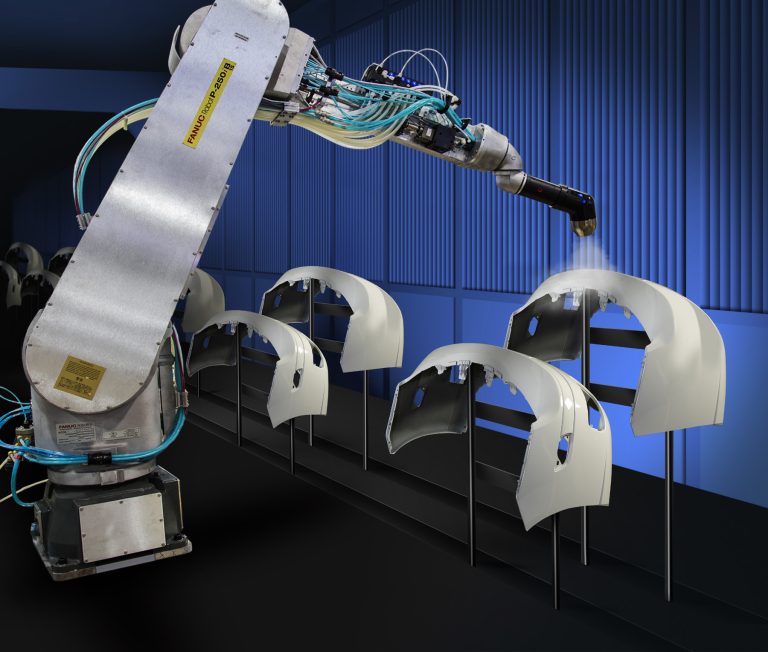
Image credit: automatedsolutions.com.au
Consistency, efficiency, and measurable improvements
Because of fatigue or minor variations in the technique, manual painting may result in changes in thickness and coverage. Paint robots eliminate this variance by employing the same motion patterns in each production cycle. This level of repetition ensures an uniform surface finish and the best distribution of materials on every part.
Advanced paint systems that use robotics improve efficiency of transfer. By keeping precise distances and direction between the applicator and component, the amount of overspray is decreased and the coating material gets to the target surface. The less waste material directly affects cost savings, while reduced CO2 emissions from volatile organic compounds help environmental compliance initiatives.
Integrated fluid handling within paint robotics ensures accurate mixing ratios for multi-component coatings. This reduces the chance of inconsistencies which could compromise finish integrity. The combination of steady flow control as well as programmable parameters allows producers to fine-tune atomisation and spray patterns in real time, without disrupting production.
Productivity and safer workplaces
The longer time between maintenance is a significant benefit of a paint robotic system. In contrast to manual processes, robotic paint cells operate continuously with little interruption. Once programmed, they can provide constant throughput without breaks or monitoring.
Safety considerations are important in facilities that handle solvent-based coatings and two-component paints. When working with flammable or reactive explosive materials, atomised paints can cause dangerous environments. Modern paint robots can work safely in difficult conditions. This decreases the chance of exposure to chemicals that are harmful and improves safety at work.
The conveyor tracking technology increases productivity further by allowing robotic painting of components when they are in motion. This feature expands the working area and helps keep the production lines in good working order.
Australian Automation Expertise Supporting Industry
It is essential that producers are able to access automation partners who are experienced. Automated Solutions, a leading robotic integration provider in Australia has earned the reputation of providing advanced robotic services. With an extensive understanding of automation engineering, the group works as FANUC certified robot integrators to assist companies in the implementation of custom robotic paint solutions that align with their operational goals.
Automated Solutions helps manufacturers evaluate their processes and develop robotic paint cells, combining the expertise of industry experts with technical know-how. Facilities can gain an understanding of how to improve performance by the use of simulation, collaborative planning and system integration.
Paint robotics is more than just an automation. It is about improving quality, safety and effectiveness. Paint robot systems designed properly can transform surface finishing into a repeatable, effective and controlled process. The support of automation specialists will help companies improve their competitiveness, and ensure the long-term development of a competitive market.